兵临城下
China's factory-built buildings find growing markets overseas_我的网站

一 |
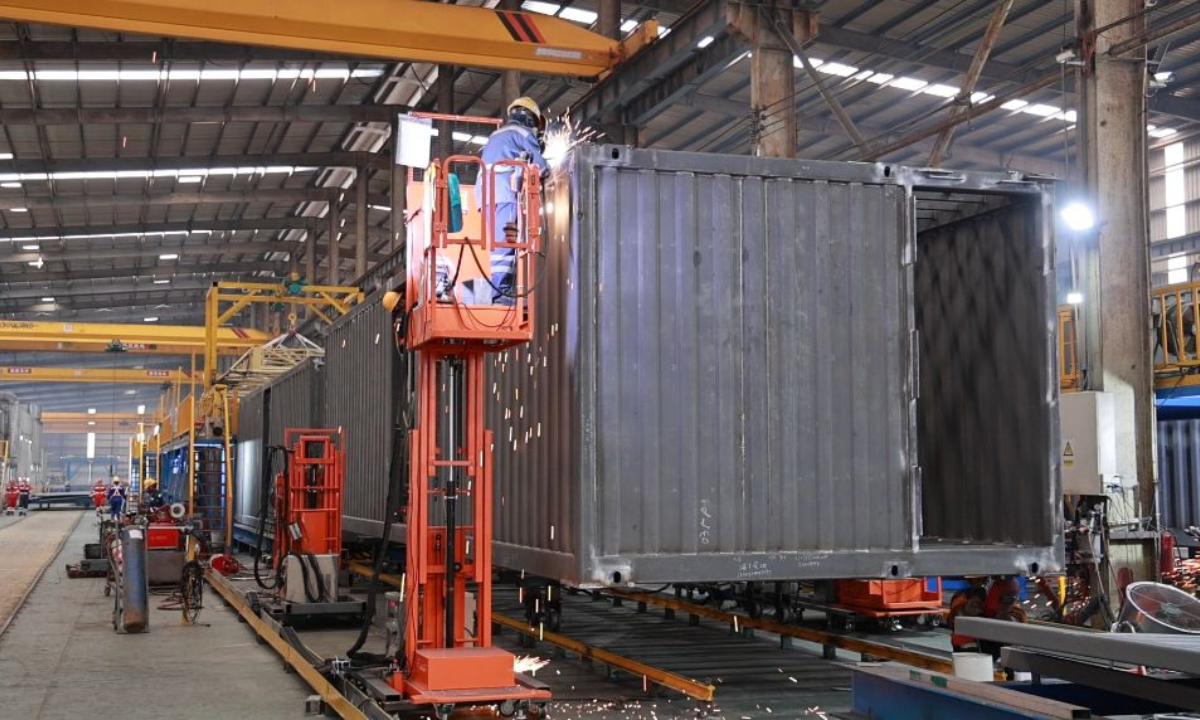
A 19-story hotel in Brisbane was not a conventional construction project in Australia, much of it having already been built thousands of kilometers away, inside a factory in south China.
Its room modules arrived with walls, pipes, wiring and interior fittings largely completed, allowing the building to be assembled at a pace of roughly one floor every four to five days.
The project was delivered by Foshan Meizong Buildings Technology Co., Ltd., a firm based in the city of Foshan in Guangdong Province. It reflects a broader shift in the industry, with more work that once had to be done at a construction site now being completed on a factory floor.
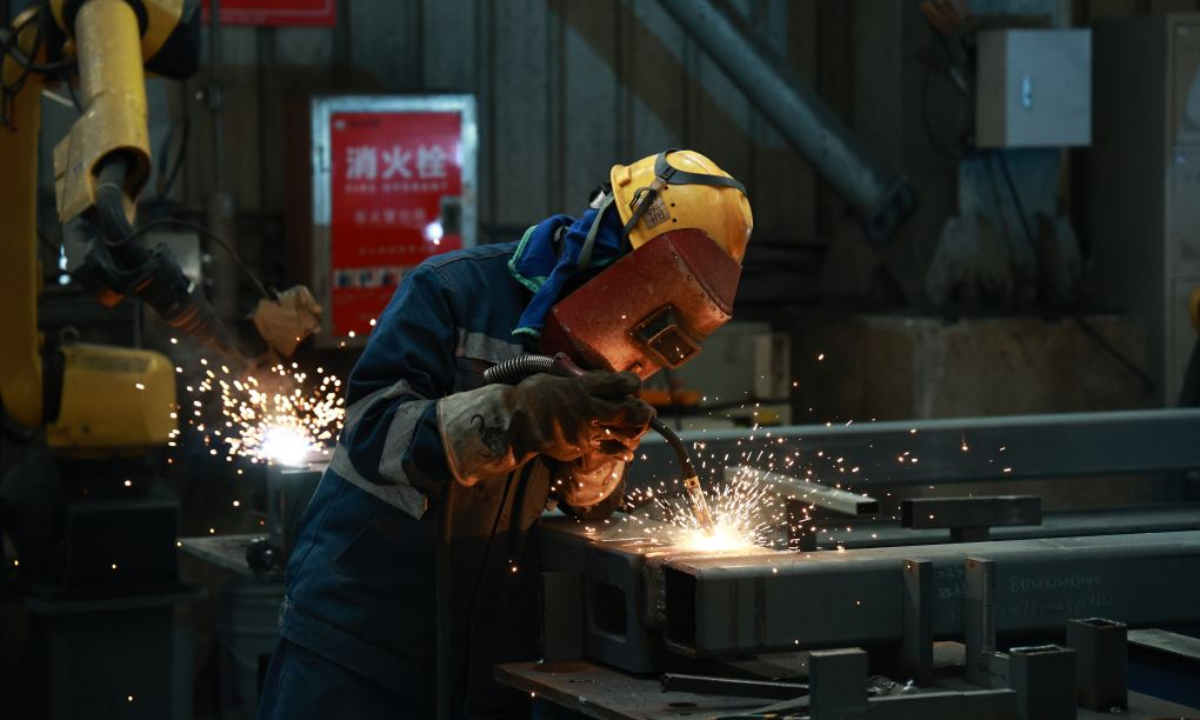
Inside Meizong's workshop, automated cutters slice steel tubes to precise dimensions as workers weld structural joints. Assembly teams install wall panels and lay utility lines. In the finished-goods area, dozens of units stand ready for shipment, with kitchens, bathrooms, lighting and sockets already fitted.
More than 90 percent of the work can be completed in the factory, while delivery takes only about one-third of time needed for conventional construction, according to Pang Mingyuan, the company's general manager.
"Building a new home is like building with blocks," Pang said.
Modular housing is gaining acceptance in markets such as Australia and New Zealand, where conventional construction faces high labor costs, lengthy building cycles and weather-related disruptions, while housing remains scarce in some remote areas, Pang adds.
Foshan alone is home to more than 300 exporters of prefabricated buildings. Across the industry, modular structures are being used for hotels, dormitories and offices, while some manufacturers are branching into customized outdoor spaces.
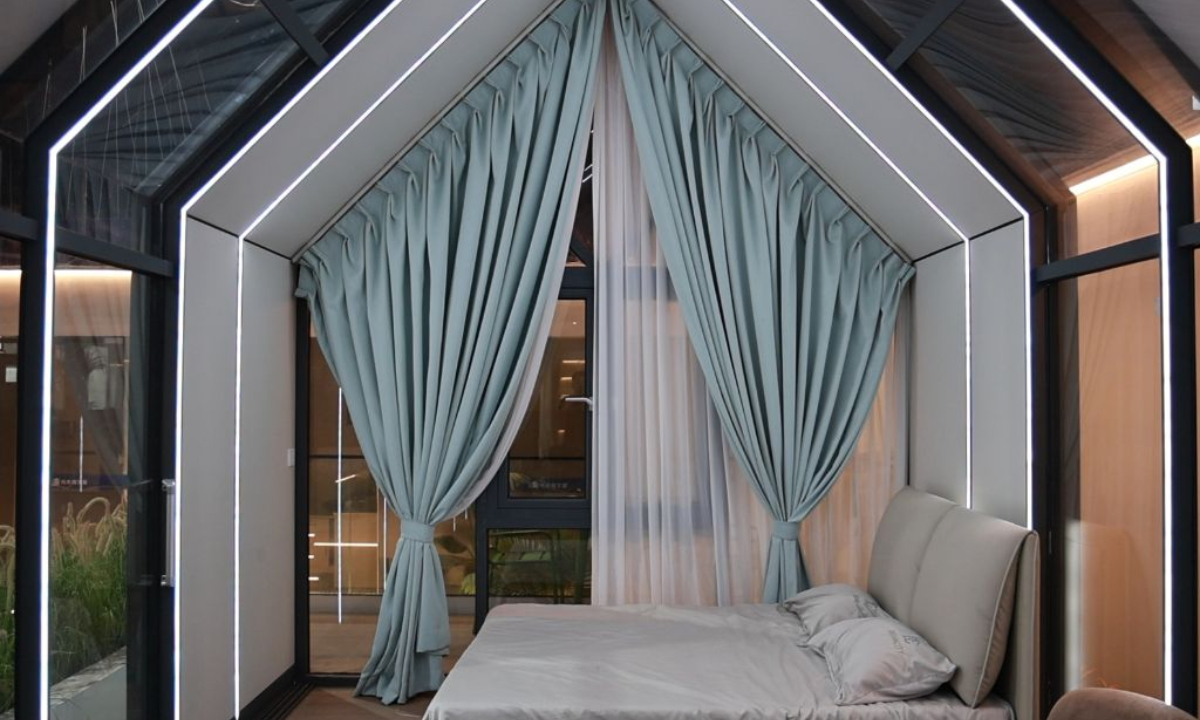
At SunnyJoy Intelligent Technology Co., Ltd., the glass roof of a modular outdoor room slides open under electric power. Made up of 13 modules, the structure attracted attention at this year's 139th Canton Fair.
"Three adults can assemble it in two and a half hours by following an installation video," said Zhang Yong, the company's general manager.
The company's products sell well in North America and Oceania, while emerging markets in Africa and Southeast Asia are also growing rapidly. Social media has become an important source of overseas customers: SunnyJoy has built a following of around 10 million across domestic and overseas platforms, with online channels generating more than half of its customer inquiries.
Behind such products is the Pearl River Delta's manufacturing network. Zhang said a single outdoor structure can involve dozens of suppliers, with everything from frames and worktops to drive systems and lighting sourced within the region.
That proximity allows manufacturers to adjust designs, upgrade components and respond quickly to changing customer requests. As products become more integrated, companies are also expanding into higher-value offerings that incorporate solar glass, energy storage and intelligent control systems.
At a modular factory of China Construction Science & Technology Group Co., Ltd. in the Shenshan Special Cooperation Zone, laser cutting, automated welding and intelligent assembly work in coordination. A digital management system links design, procurement and production, generating material lists and processing drawings from design plans.
Its standardized production system can turn out a wall in 12 minutes and a room module in two hours. The facility has an annual capacity of up to 30,000 units and can produce different types of building modules in parallel according to project needs.
The expansion taking place on factory floors is also showing up in export figures. In the first half of this year, exports of prefabricated structures from seven cities under Guangzhou Customs reached 1.94 billion yuan (285.7 million U.S. dollars), up 21.2 percent year on year, with products reaching more than 190 countries and regions.
One modular-building producer said its export orders have risen nearly 60 percent year on year so far this year, with production scheduled several months ahead.
Manufacturers are also expanding their localized services overseas. SunnyJoy said it is working with third-party warehouses in markets including the United States and Australia to speed up deliveries.
For Chinese producers, the opportunity goes beyond shortening construction time. Their expansion overseas points to a broader shift: buildings are increasingly being designed, produced and exported more like manufactured goods.
。 Dhaka, Oct 11 (UNI) Bangladesh Federal Union of Journalists (BFUJ) and Dhaka Union of Journalists (DUJ) have raised questions over the issuance of a gazette notification declaring 29 government agencies and institutions as 'critical information infrastructure'.
The organisations have termed the gazette notification as an ulterior motive of the government and a new weapon to muzzle the freedom of media.
They also said this is another attack on the news media ahead of the next parliamentary election and demanded immediate cancellation of the gazette notification.
BFUJ president M Abdullah and secretary general Nurul Amin Rokon and DUJ president Kader Gani Chowdhury and general secretary Shahidul Islam made these remarks in a joint statement.
Journalist leaders said this gazette notification announcing critical information infrastructure is deceptive showing excuse of section 15 of Digital Security Act. The journalist community has rejected it.
They also said the government move will prevent independent journalism. This gazette notification is conflicting with the Right to Information Act.
If the list is scrutinised, it would be clear that the government has dishonesty and ill-motive behind the step.
Sensational and important agencies such as the national parliament, the judiciary, the audit department, the defence and home ministries are not included in the list.
The national election is schedule to be held the next year.
Among 29 agencies and institutions, there are names of banks and financial institutions and different organisations related to the elections.
There are names of agencies and institutions which are directly and indirectly related to the elections.
The journalist leaders alleged this gazette notification has been issued so that the journalists cannot collect or publish news related to this.
In the statement journalist leaders demanded the cancellation of all black laws including the Digital Security Act. They also made a demand to halt the initiative to amend the Press Council Act keeping a provision of monetary penalty for journalists.
As per section 15 of Digital Security Act, the post, telecommunication and information technology division issued a gazette notification on 21 September announcing 29 agencies and institutions as critical information infrastructure. The ICT division uploaded the gazette notification on its website on 26 September.
Information infrastructure is a computer system or network of some institutions or agencies, where information is stored. If anyone enters the critical information infrastructure, he or she will be sentenced to seven years or will be fined maximum Tk 2.5 million or the both.
If anyone illegally enters and damage or try to damage, he or she will be sentenced to 14 years or maximum Tk 10 million fined or the both.
ICT division said this information infrastructure will not be an obstacle for the people in gathering information.
Following the issuance of the gazette notification, different political parties and organisations protested against it.
Transparency International Bangladesh (TIB) has termed the list questionable, confusing and inconsiderate. The organisation apprehends the misuse of the act.
UNI MAZ GNK。
Current article:http://9ytl.suiyangguiduanzudoushaopao.buzz/3me/20260826/2725208.html
Published on:05:51:42
淄博新闻


- ·科学家开发光激活的“智能塑料” 可用于柔性电子产品和机器人
- ·【交小哇价格指数】2022年09月13日_行业_交通
- ·EconoScope | Hoshine case puts U.S. forced-labor enforcement to the test
- ·Chinese Culture Carnival opens in London
- ·嫦娥四号完成了人类第一次月球生物实验:棉花种子发芽
- ·Beijing likely to receive one-third of annual rainfall in 24 hrs amid Typhoon Dolphin
- ·Nearly 120 automobile brands to participate in Chengdu International Motor Show


